April reads, part one
Women in complicated circumstances

Hi friends
We have a lot to talk about with the books I’ve read so far this month, so no preamble today and no focus on one book – there were just too many good things to deep dive into. This is a format I might continue with - I rarely seem to keep my reviews short these days anyway!
OK: let’s go!
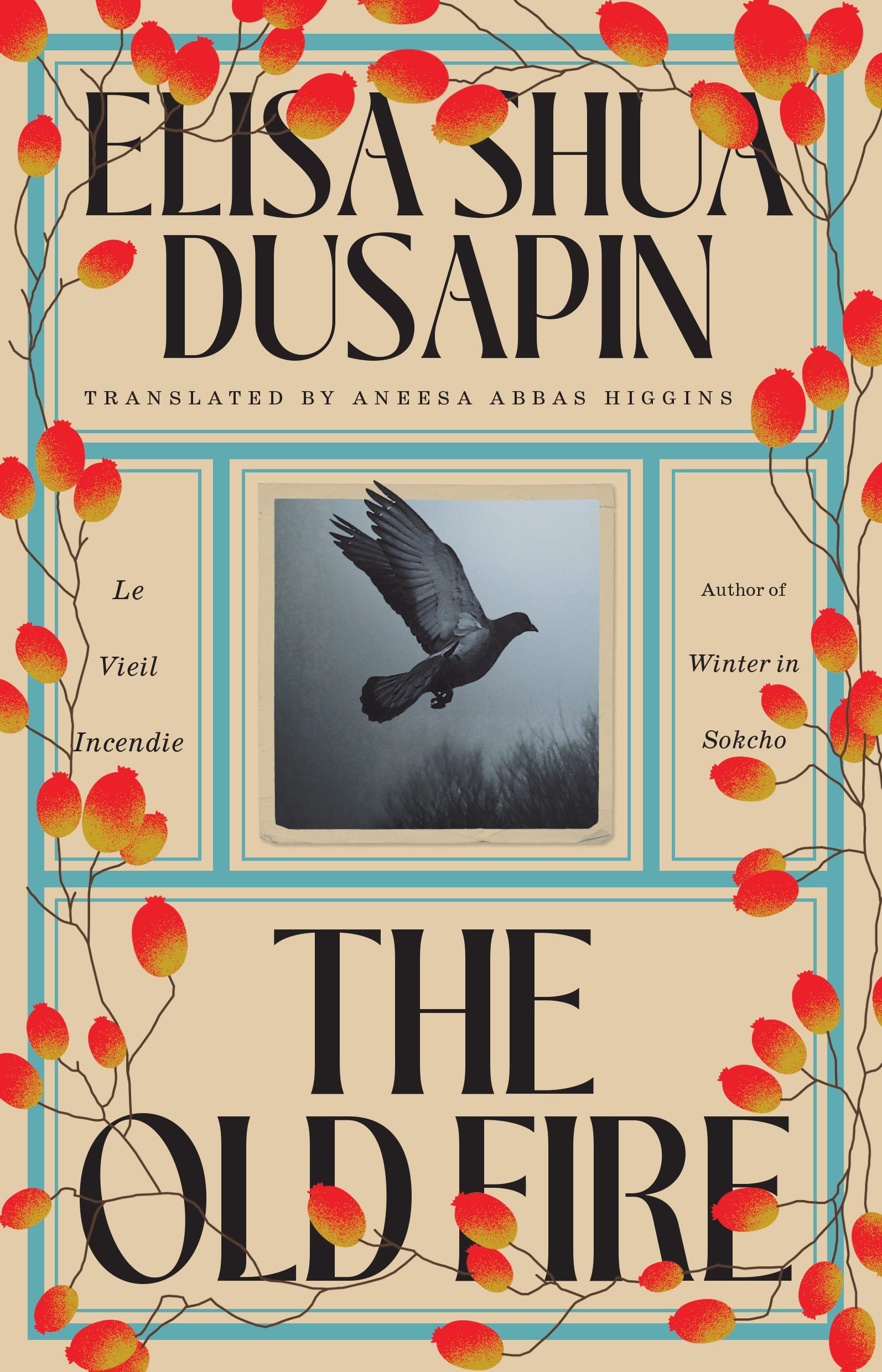
The Old Fire by Elisa Shua Dusapin, translated from French by Aneesa Abbas Higgins (2026, gifted)
Dusapin’s novels always feel quiet to me in a good way. It’s not that there isn’t drama – there is! It’s just that it’s very interior or under the surface, and her writing feels calm and measured in contrast to what’s happening in her characters minds.
The Old Fire is no exception. It’s a book about sisters, a relationship that fascinates me endlessly because I don’t have one. I DO have a brother, but I think that’s generally very different – whilst we of course communicate, I would say it’s less about going deep on our feelings (or rather, I will go deep and he listens with patience and then hangs up). At the same time, my brother would literally do anything I asked of him with no questions asked – he simply turns up to fix my oven, move my books, build furniture or do whatever else I need and then leave without any expectation that I return the favour. He is uncomplicated in his loyalty.
Anyway: the sisters in this book have been somewhat estranged for a long time. Agathe, the older one, has been living in New York for 15 years. After her father’s death, she returns to their childhood home in the French countryside for the first time to help her sister Vera clear the place out. Vera, meanwhile, has not spoken a word since she was 6 years old, which makes communication harder. As they go through a lifetime of belongings, memories return and the bitterness of the past surfaces.
There’s a wonderful sense of place in this novel. Although she writes with simplicity, she chooses her words carefully – which means with a single sentence she will convey something about the crumbling house or the neighbour’s pigeon tower or the drizzly woods and piece by piece it builds a lasting picture.
The atmosphere adds to the melancholy tone. Loss, after all, is the thing that’s brought these two sisters back together again. It’s one of those books where all that is left unsaid becomes more important than anything else, and this is heightened because Vera physically does not speak. Dusapin can’t rely on dialogue between them, and it destabilises us as readers too, it forces us to make assumptions or read between the lines - sometimes we get it right, and sometimes we don’t. And it’s a house full of ghosts: the father has died, the mother left them when they were children and of course the ghost of their own childhood lies unspoken, emerging from every chest of drawers or box that they slowly clear. Vera is a keen observer, perhaps seeing more than her sister anticipates, and the conflicts and confusion that arise between them felt beautifully and discreetly done to me. I enjoyed this very much, although it remains to be seen how much of a lasting impact it has. Recommend.
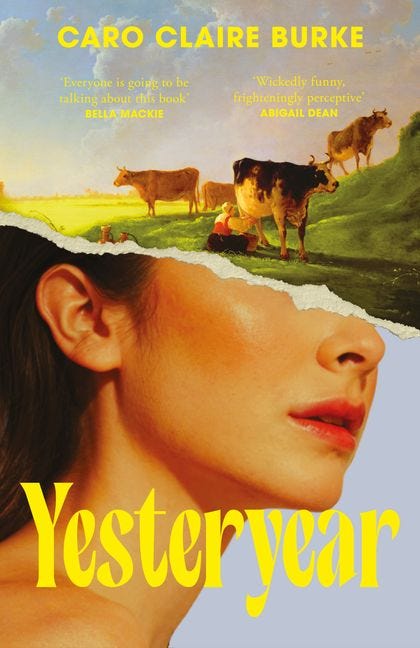
Yesteryear by Caro Claire Burke (2026, gifted)
This is surely one of the buzziest books of the year and I will just come out and say that I found it really entertaining. I know not everyone has, and that is OK!
The reception to zeitgeisty books is interesting to me because there seems to be an unease about people disagreeing over them. To me, this is what makes reading so exciting! Having different perspectives is wonderful, and don’t need to come with any shame attached which is where I have a feeling this stems from. Now that so much of our opinions are shared online, we are anxious that they be the “right” ones.
So, the people who enjoy it see other people’s criticisms and think maybe their pleasure was wrong. The people who didn’t enjoy it see the raves and think maybe I’m being a naysayer. For me, books are one area of life where all opinions can be valid if they are shared respectfully. Exchanging views expands your thinking, and it shouldn’t take anything away from your reading experience!
I rarely read books I would categorise as “page-turners”. The binge element is therefore part of what I enjoyed. On Instagram I compared this to candy – the sort of book you finish on a sugar high before crashing, exhausted and in need of some vegetables. I am personally OK with that - I think probably we all have our equivalent pleasures both in the book world and outside of it. If you are OK with books that are purely there to entertain, then go ahead and enjoy the ride! Lean into the unhinged and then exit. I don’t think there is particularly meaningful engagement here on the topic of tradwives and the Christian right-wing set, so if that’s what you’re looking for, keep that in mind.
While I didn’t walk away feeling enlightened about tradwife culture, what kept me more satisfied was the exploration of what it means to be an online personality.
Let me tell you more about the book. It’s about a tradwife called Natalie who is huge on social media. Her kids are homeschooled, she bakes sourdough and the family lives on a gorgeous farm called Yesteryear where they centre “traditional” Christian values that would have been prominent in frontier times. What you don’t see are the nannies, the teachers, the producers and the high-spec appliances hidden behind the scenes. Natalie feels no remorse about this: she is a brand, and she has been merciless about both building it and protecting it.
Then one morning, she wakes up to a contorted version of reality – there is her house, her kids, her husband, but it all looks off somehow. Her perfectly fake life is suddenly legit: it’s like she’s gone back in time to 1855 – with an outhouse and no electricity to prove it.
As the book progresses and we get more of Natalie’s back story, two things become clear: she’s not a nice person, and she’s not a reliable narrator. What Natalis IS, though, is smart, ambitious and ruthless. By making her so, readers are destined to dislike her because she does what it takes to get what she wants – and she’ll use anyone necessary along the way. And she is obsessed with her online presence – how she is percieved by her followers is the most important thing. There’s something purposely uncomfortable about the fact that these very male attributes have been given to a woman. And the book does obviously want to upend the hypocrisies of people in this online space, with cult-like popularity who unfortunately have huge levels of influence.
When you are a 24/7 performer like Natalie, your audience is your one true relationship – and it goes both ways. You rely on the adoration you get from your fandom, but you also know that they can turn on you at any moment. I found reading about the constant vigilance both fascinating and exhausting. We learn more about Natalie by going back and forth to her past, as she begins to realise what shape she wants her life to take and why – but this comes with a continous mental strain as she juggles her real self and the self she wants to outwardly portray.
At the same time, influencers like her have no sense of the responsibility that comes with this level of authority and sway. Natalie is obsessed with keeping her fans in the dark about the convenient realities of her life - and the mask she wears in both marriage and motherhood.
But that mask blinkers her too – she has outsmarted the people around her for so long that she doesn’t see her own downfall coming. In fact, she thinks so much of own competencies that she is blind to what’s happening in her own house, both with her husband and father-in-law - a right-wing Christian who wants her endorsement in his bid for the presidency. His dangerous rhetoric suddenly has a much bigger platform than she could ever imagine: a national stage from which to spew his bigotries. She believes her popularity, her lifestyle and maybe even her cunning will protect her.
The fact that it doesn’t is, to me, what the book is really about.
Because when Natalie’s fake world becomes real, her followers, brand deals and cashmere sweaters won’t save her. When she’s living FOR REAL in the conditions she claims are so crucial to a good, honest life, how long until she cracks?
Will it be when realise you can’t actually bake a loaf of bread? When you have to wear dirty clothes every day? When there’s no gourmet snacks on hand? Or will it be when your child is ill and you can’t buy the best doctors? When you aren’t allowed to do anything but cook and clean? When your husband slaps you for being disobedient?
There are women in the world right now who aren’t tradwives by any means but who are living a more contemporary version of the life I’ve just described - not by choice but by necessity. Not being able to afford childcare put them there. Poverty put them there. Gendered violence put them there. Lack of healthcare put them there. Religious bigotry put them there. Maybe Caro Claire Burke wanted just one of these social media tradwives to live a day in their shoes, even if it had to be one she created herself.
I would love to hear your take on this!! Spill all the tea in the comments!
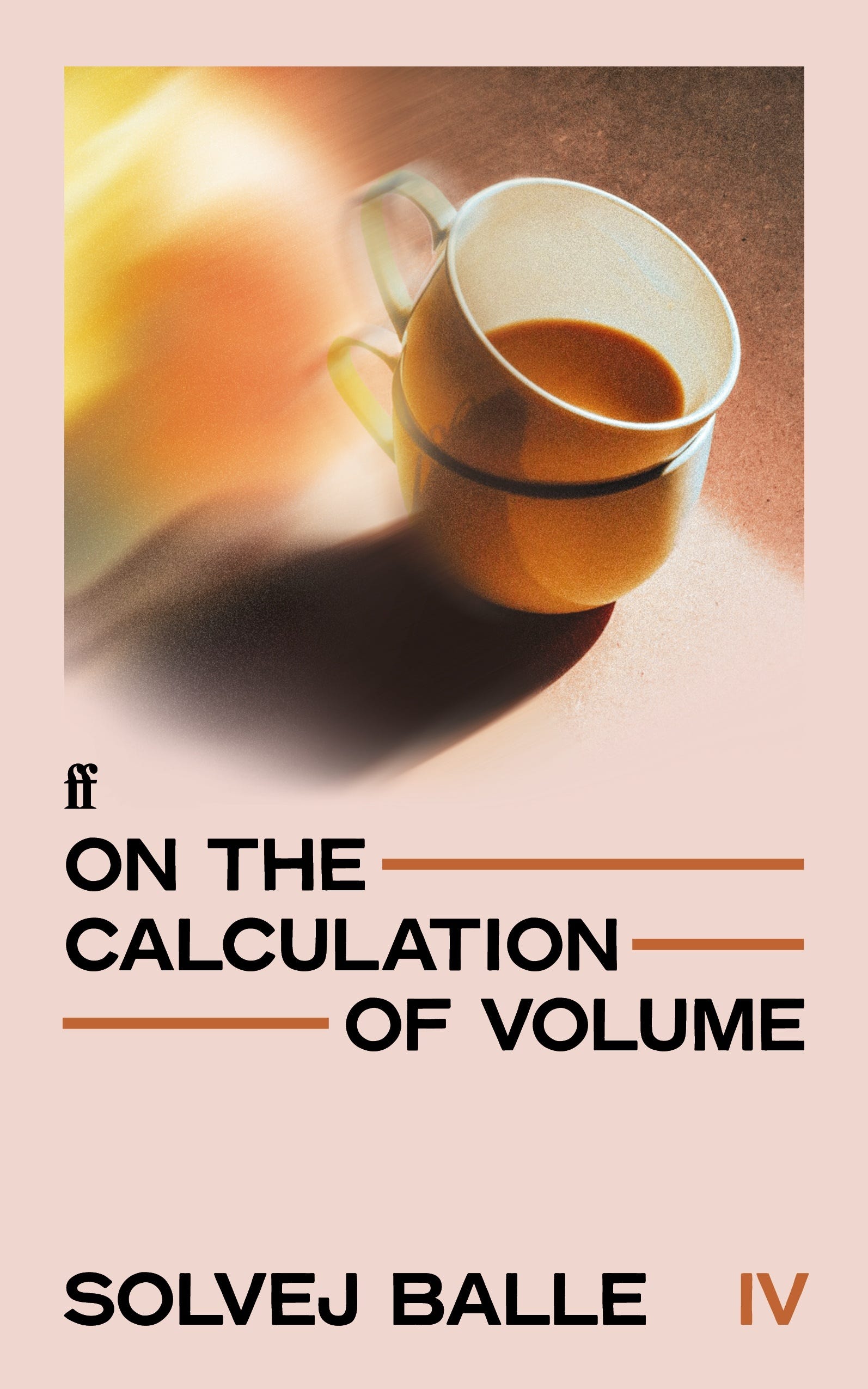
On the Calculation of Volume IV by Solvej Balle, translated from Danish by Sophia Hersi Smith and Jennifer Russell (2026, gifted. First published in 2022)
We’re BACK in November 18th! And what a place it’s turning out to be. It will be hard to write about this with no spoilers - I’m going to try but there may be some mild hints here.
The first thing to say is this is just as good as any of the previous volumes. The thing I am consistently amazed by is how Balle can keep this world expanding with such confidence - I get the feeling that she knows exactly where she is taking this story.
I will say nothing more about the plot than what is already blurbed – Tara and her friends Henry, Ralf and Olga are living in a villa in Breman, when more people turn up at the gates who are also stuck in November 18th. As others continue to arrive, the house becomes filled with movement, ideas, conversations and questions.
It doesn’t sound like a lot is happening but that really depends on your definition of plot! What I find endlessly fascinating is the way Balle is building an entire microcosm of community within time. A community that must find its own feet in every way – its own language, culture, employment, diet and healthcare system. The way she writes about how people must move forward within a time loop is something that I will never get bored of. The domesticity of life, the routine of life, must prevail if they are to feel any sense of normality in the reality the find themselves in. So yes, much of the book explores how they find ways to make this happen, how their conversations circle and grow and circle again as they make sense of how to exist.
I don’t want to dwell too much about how this community grows because I want you to experience the book yourself, but it’s plain from everything that’s come before that it IS growing. What, then, does this mean for everyone’s relationships? In any situation where more people are present, you will have different ideologies forming. There is a broader scope of thinking, and groups will inevitably begin to form. For some, this time loop has given them a new lease on life. They came from situations that were not serving them and gain an opportunity to start again. For others, November 18th is still just a stopgap, a place to be until time starts up again. They believe it will eventually happen and are happy to find something useful to do in the meantime. And then there are those who want to face up to facts: maybe tomorrow will never come. Maybe they will be stuck in time forever. And while this creates unease within the community, it also jolts them into having to think about this reality with new pragmatism. Should they try growing food? What to do if someone needs a hospital or dental work? How can they keep their minds active? And how should they being to talk about their situation with each other?
The idea of language becomes important in this volume. Language is essential to belonging, to feeling at home, to knowing who you are, where you are, what your purpose is. Finding the right words to describe units of time or to express your unique circumstances builds connection and unity, it makes you feel you are part of something, that you fit in somewhere. I loved how Balle tackled this with such nuance and consideration. The writing in the book itself is always so carefully simple – she never overcomplicates things, never tries to write in prose that’s ornate and over the top. There’s a quiet and straightforward beauty in that.
And of course, it ends with another twist, something new that changes the game yet again, and makes me even more curious about what new turn Tara’s life is going to take in the next volume!! Highly recommend as always.
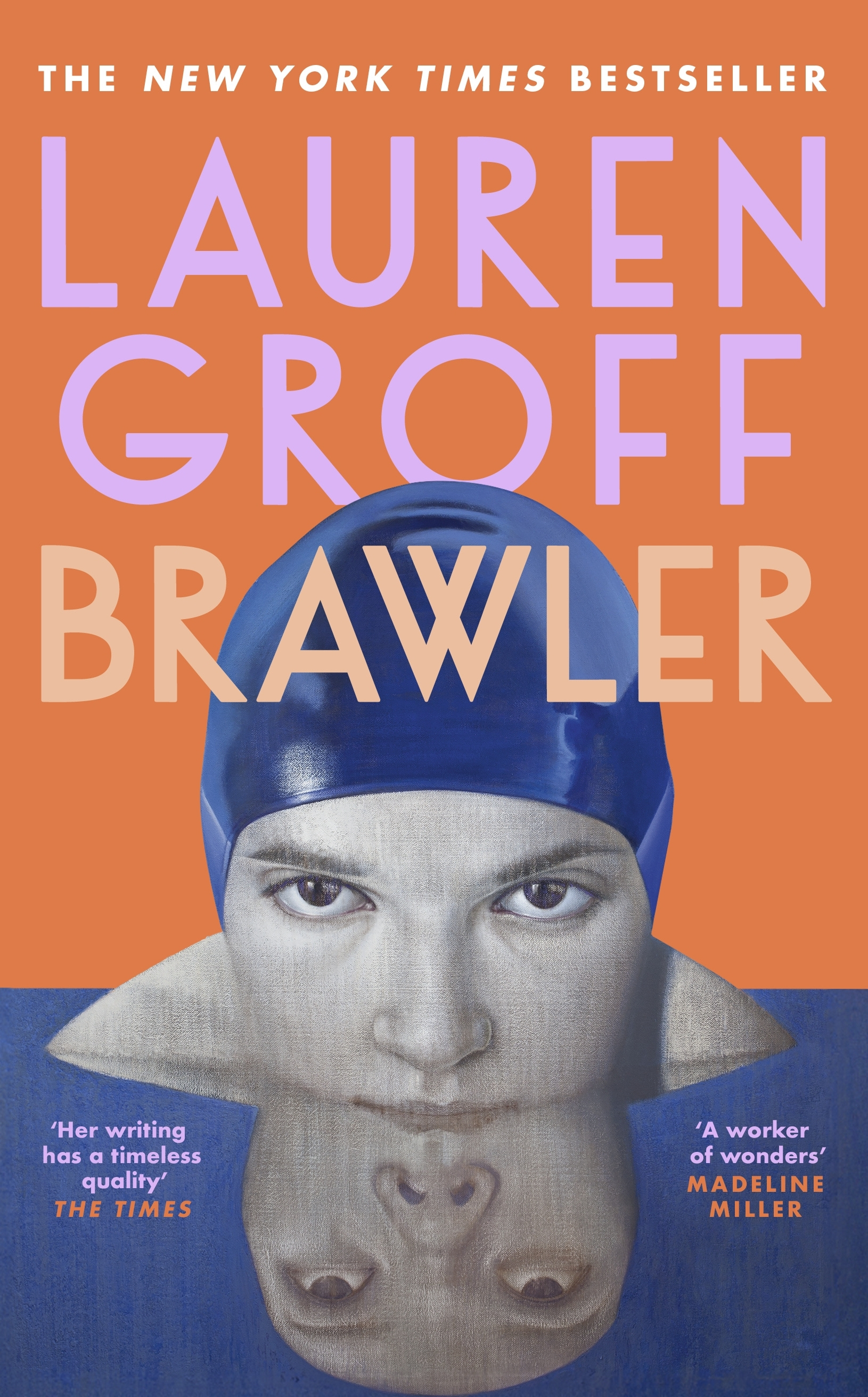
Brawler by Lauren Groff (2026)
Does Groff EVER miss? I think not. And I guess that’s the short review! But there is plenty more to say about these stories, starting with the fact that every single one is a banger. I’m not someone who knows this genre intimately – I go through ups and downs with short story collections; sometimes I’m really into them and sometimes I lose interest after a few pages.
But I think what makes a successful short story for me personally is expanse in economy. By which I mean, I want the story to give me the emotional breadth of a novel, but I also want it to feel structurally compact, where every word counts for something. For that reason, I think there’s got be something IN the story that causes tension or impact to be memorable, to give you that wallop.
I think this is Groff’s great talent. She seems to be able to elevate her stories from very good to exceptional both through her writing and in the surprises she embeds along the way. You might get to the halfway point and be thinking yeah, I’m really enjoying this! And then by the end your jaw is literally on the floor.
I won’t go through them all for obvious reasons, but I’ll pick two that I haven’t been able to stop thinking about.
The very first story in the book is called The Wind and it has haunted me since I read it. It’s about a woman trying to escape her abusive husband with her three children. She has planned it as best she can, giving the children instructions to catch their school bus as usual and get off at a stop where she will be waiting with the car. They need to pick up her pay check first and then get on the road as fast as they can before he figures out what’s going on.
The tension Groff creates in the space of 18 pages is off the charts. I felt sick with dread reading it, and there are images created with a single sentence that have stayed with me. The narrator is the daughter of one of the children in the car, and she tells us where they all ended up – little jumps into the future that come out of nowhere and build a more complete picture of this family. The way the story is peopled with other characters who appear so briefly and yet who feel so fully formed, the fear and strain she builds right up to the final pages. A masterclass.
From one of the shortest stories in the book to the longest – it’s called What’s the time, Mr Wolf? and at around 80 pages this could be considered a novella. We meet the main character as a young boy at his grandparents Fourth of July lunch, instantly transported to place where a particular type of wealthy, privileged people live. The details aren’t over the top, but we know exactly where and with whom we are situated. This lunch is contextually important, but the surprise is what happens next: we rapidly move through time, following the boy through his adolescence and young adulthood, through his first job to the present. This is a man who is spoilt and yet we don’t dislike him. There is a thread going all the way back to the small child we met in the opening pages and we can’t shake that image, even as momentum grows and we realise something really awful is about to happen. AGAIN, the level of information given to readers within mere sentences creates a whole world to work with, and I was left breathless by the end.
I find it hard to fault this collection, even though I obviously have my favourites. If you’re a fan of Groff, this is a must.
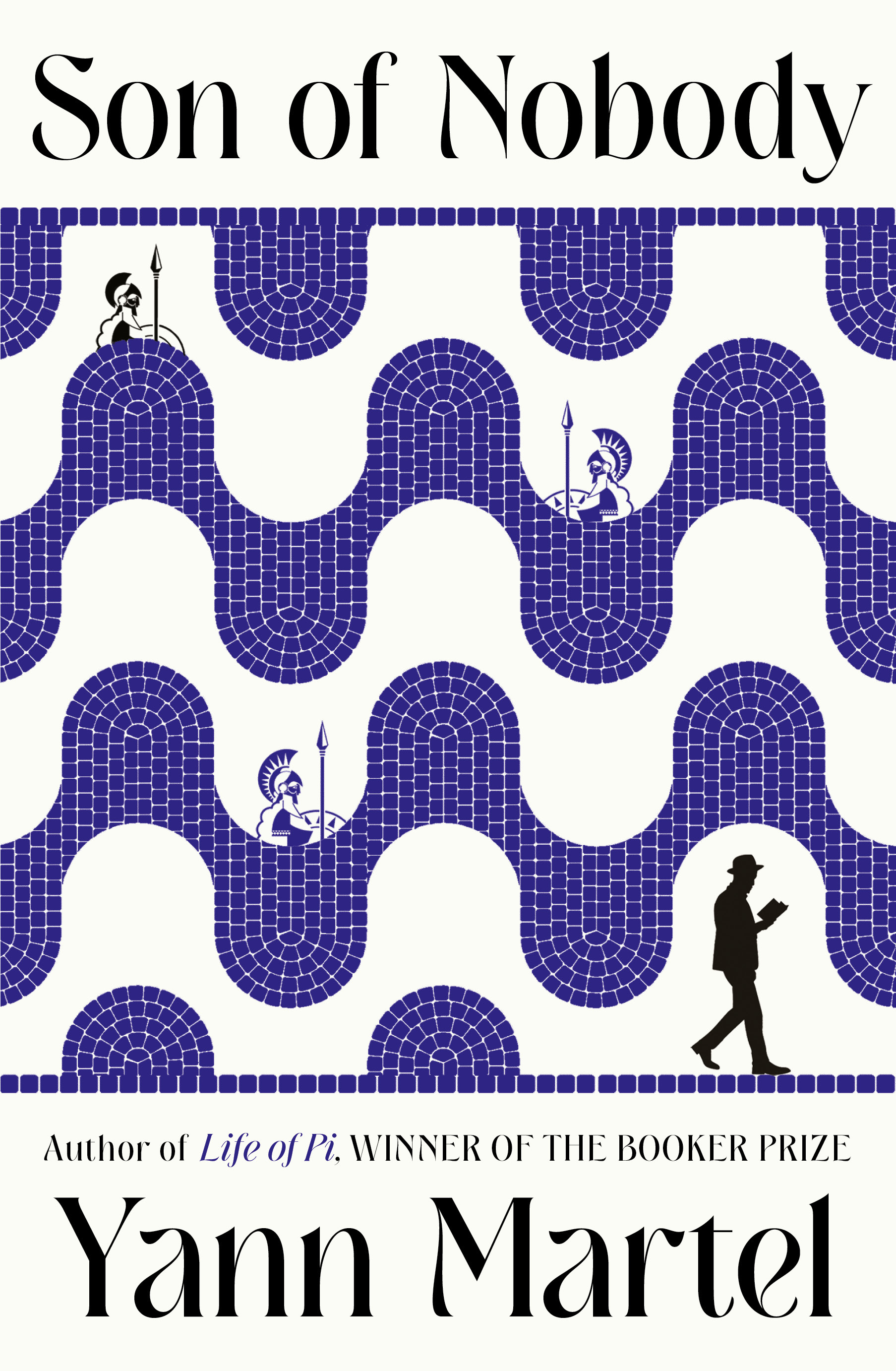
Son of Nobody by Yann Martel (2026, gifted)
Yann Martel is coming to the Sydney Writer’s Festival, so I wanted to read this new book in plenty of time to hear him talk about it. I wasn’t sure if my enjoyment would be hindered by the fact that it leans heavily into the Trojan War myth, with references to the Iliad and the Odyssey – neither of which I have read.
It’s time to admit I’m not really a classics girl. Although I’ve enjoyed some of the re-tellings that have been popular in the last few years, the market has become too saturated for me to be able to discern which I would actually like. I mention this because I assume there are going to be a lot of people out there like me who might also be worried about their classics knowledge when approaching the book.
But I’m happy to report that I really enjoyed this! There’s enough context throughout to give you what you need and honestly, a quick google gave me the rest. There is NO doubt in my mind that if you’re familiar with the original texts, this is going to be a much richer reading experience for you. But I never felt lost.
The book has an unusual structure and I’m a bit of a sucker for experimental form. It’s about a Canadian academic named Harlow Donne, who is offered a place at Oxford for one year to study ancient papyrus fragments. While there, he discovers a new account of the Trojan War that positions a commoner as the hero of the story – and that commoner is called Psoas, “the Son of Nobody”. Donne carefully translates and constructs the story of the Son of Nobody, taking the fragments he finds and turning them into a new epic poem he calls The Psoad. He dedicates it to his daughter, left behind in Canada with her mother.
When you open the book, the top half of the page is the poem itself – and I must say I found it engrossing and immensely readable. Perhaps a little too readable; I did find it leaned into a more contemporary style that I suspect is not present in the Iliad or the Odyssey. Still, it’s a wonderful romp, an adventure, full of battles, loss and hardships.
The bottom of the page is constructed of footnotes, and it’s here that we get to know Donne himself. He speaks directly to his daughter Helen, named for Helen of Troy, explaining to her the events of the past year including the breakdown of his marriage to her mum. The footnotes also function as historical and geographical context for the poem, and that’s why I found them so handy. At first I wasn’t sure if the two parts would work together fluidly but they do. And the footnotes are where so many of the surprises of this book are unearthed. They foreshadow terrible truths and reveal more about Donne.
This is asking a lot of questions about storytelling – the act of translation and composition. Donne essentially creates the story he wants. The poem has been carefully constructed; it is one version, his version.
There are times fiction can become fact in our minds, if it’s told often enough and with enough conviction. Donne lives to some extent in a fantasy, in a story that he wants to be real, where the person pursuing glory is the equivalent of an everyman, an anti-hero, a nobody that fights to becomes somebody. It says a lot about him as a person and to be honest, his real-life choices upset me a lot. But Martel challenged me to feel empathy nonetheless. Truthfully there is so much to unpack in this book and I’ve barely scratched the surface. It’s not perfect by any means, and there were some angles I found perplexing – like the way he tries to link Jesus as a historical figure to Troy, for example. It’s not that I couldn’t buy it, it just felt too light on and unnecessary amid everything else he was exploring. Still, I do recommend this.
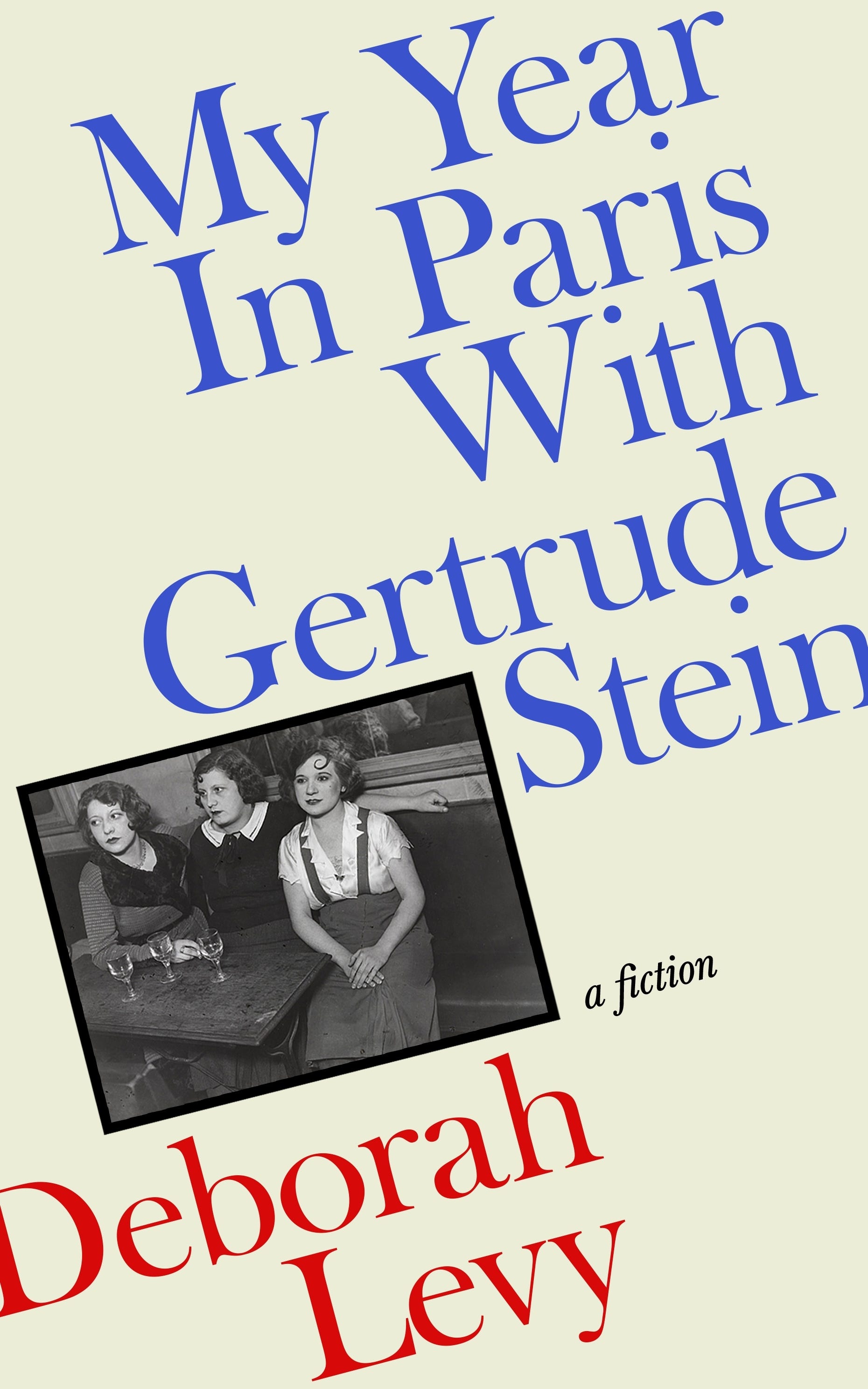
My Year in Paris with Gertrude Stein by Deborah Levy (2026, gifted)
Maybe my favourite thing I’ve read so far this month! But Levy is a personal favourite of mine, so I’m not surprised. I also love books that take disparate ideas about art, creativity, writing, place, friendship and so on and bring them together in an interesting way.
In this case, there’s sort of a cohesive narrative…but also not. Much of the text is made up of fragments, quotes, facts and historical anecdotes. Perhaps it’s for this reason that the the book has a subheading - “a fiction”. Levy wants to remind us that this isn’t non-fic or biography, despite the main character being a woman who feels a lot like Levy herself.
Having said that, your appetite for this may depend on your interest in the subject matter because the book really is about Gertrude Stein, the American writer and art collector whose salons remain legendary. Now, she’s regarded as an icon of modernism and queerness, a “self-declared genius” who befriended complicated artists, who herself was complicated.
Our narrator is living in Paris for a year attempting to write an essay on Stein, who she feels both frustrated and enamoured by. While in Paris she meets two other women and they all become friends: Eva is an artist in a long-distance marriage and Fanny is a sexually free financier. Their complex dynamic as a trio is important: the narrator must accept criticisms, sometimes delivered harshly, from these two strong women - at the same time their love and care are essential to her ability to keep going with her work. And they’re in PARIS: they walk along the Seine, they eat cheese, they get their heels stuck in cobblestones.
The idea of modernism runs through book: to make something new, to reject tradition, to experiment, to be an individual. These hallmarks of the movement are alive both in Levy’s own form and in the characters she creates. At the same time, she gives us morsels of the great thinkers and artists who orbited Stein when she was alive. Can the fearlessness of Stein and her peers inspire a new generation? How can modernism help us in times of great uncertainty?
Thematically, the book circles other ideas too – like ownership, and loss. From the very first page, for example, we know that Eva has lost a cat she calls ‘it’.
This is the first of many losses - “they had lost it/what is it?” is a phrase you will see often! Perhaps to understand your love for something, you must experience being physically apart from it. You must understand it is not yours, that nobody can really own another living thing, or places, or even objects. So when you find it again, you can appreciate it in a new way. There’s a sense that the narrator is also losing her grip on who Stein is: and with such a personality, that is hardly surprising. But she is determined to find her, in there somewhere amongst all the myths and stories.
And indeed, maybe to BE modern we must also lose some part of ourselves as women. We must lose our shame, we must shake off indignity, we must stare the patriarchy down and hide our teeth and gums: yes, we must lose our smiles, our homes, our passivity. But loss is never the end, because everything can be made new again: Gertrude is proof of that.
The energy of this book dazzled and delighted me. It won’t be for everyone, but I adored it.
So that’s that! It’s been a really lively reading month so far, with lots to gobble up and think about. What have you read and enjoyed these last two weeks?
As always, I’ll be back at the end of April with another reading round-up.
Until then,
Nell
Thanks for another engrossing read and wonderful recommendations. I love the short stories, so Brawler is definitely going in my list. Yesteryear sounds fascinating. I meet too many people these days who have blurred lines between reel and real, so would be great to read that one.
Adding Deborah Levy’s book to my TBR immediately — this was so great, thank you!