May reads, part one
Ambition, obsession, desire

Hi friends,
I’ve only got 5 books to report back on so far this month – life has been busy!
But I’m pleased to see some balance return to my reading. There’s been some new Australian releases, some backlist and some translated fiction too. Most importantly, the quality has been fantastic!
I write this during a busy time at work, so no more preamble from me today.
Let’s get to it!
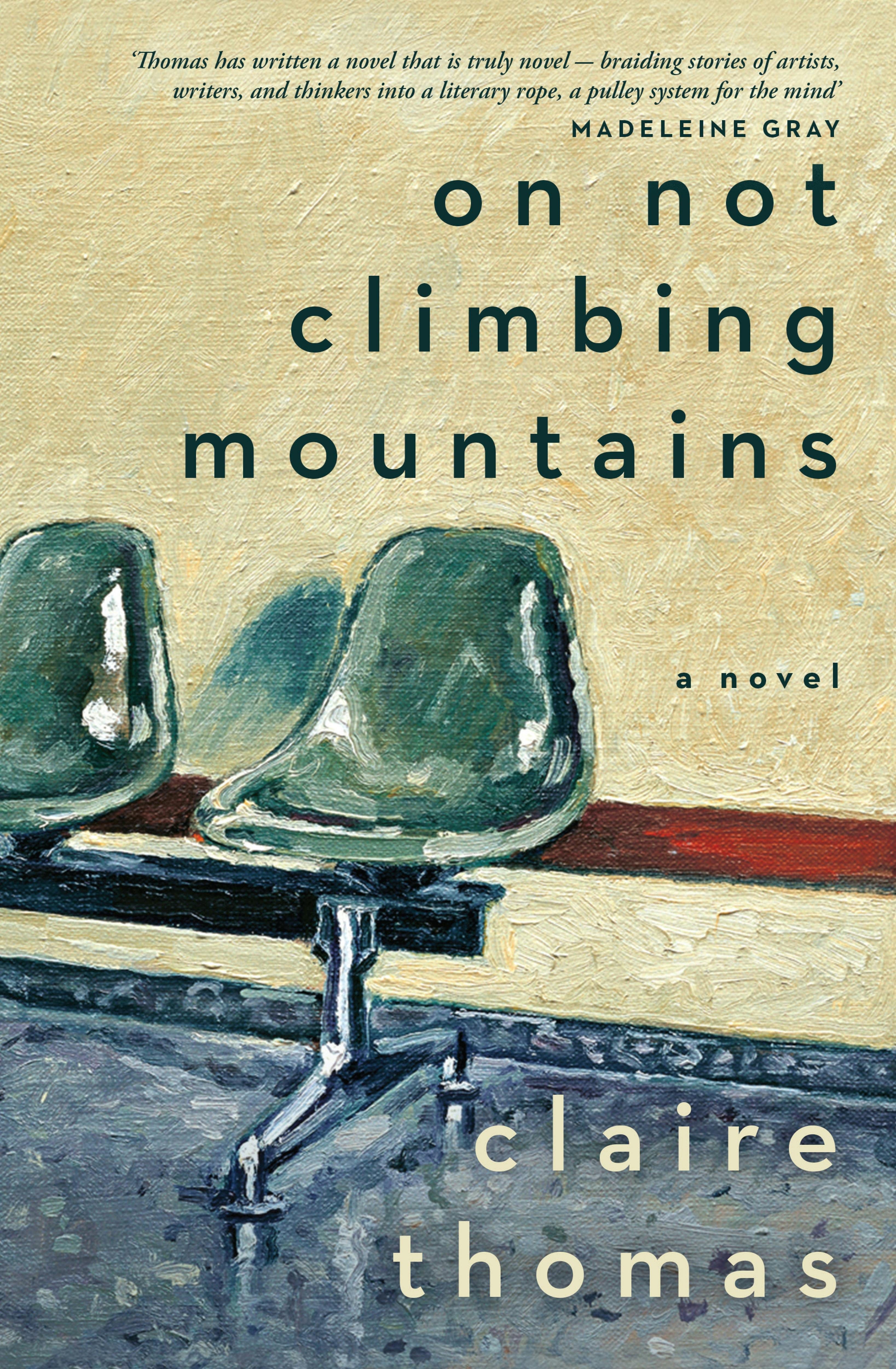
On Not Climbing Mountains by Claire Thomas (2026)
I have to say, this is one of the best Australian books I’ve read in a long time. If it’s not on every major prize list in the country next year, I will riot! It should be on international prize lists too, but I won’t hold my breath – for reasons I’ve ranted about before.
This is the type of fiction I find dazzling because of how much work the author must have done to bring it together. Using one overarching theme – lets call it “Switzerland” – it connects art, music, literature, and people or places of note in one cohesive narrative.
That probably makes no sense so let me give you the plot, such as it is.
An Australian woman, Beatrice, arrives in Geneva grieving her father, who has passed away unexpectedly. She’s planning to travel through Switzerland, which is where her dad was born and raised before he emigrated to Australia. Stories of this country seem to keep circling her, connecting her to the cities she visits, and she finds traces of writers, artists, scientists, historians and more.
Beatrice is using a Baedeker’s guidebook to the region – those 19th century travel guides that were immensely popular and seem to regularly pop up in literature of that period. Every character takes a Baedeker on their European travels! And it forms a structure of sorts. She moves through the guide’s five regions of Switzerland, and the book therefore has five parts.
You’ll hear about how Switzerland was significant to James Baldwin, Mary Shelley, Fleur Jaggy, Patricia Highsmith, Charlie Chaplin, Lenin, Nabakov, artists of the Dada movement. These stories intersect with the Swiss Alps, train station waiting room artwork, the Gotthard Tunnel, museums, Rilke’s poetry. You must trust me when I say it comes together in a way that makes perfect sense – it’s a book of vignettes that are as delicate as a web, never dense or overstuffed, and when I closed the book I felt I had read something profound. The point, I think, is to demonstrate how one life touches another and another and another, that it has been that way through time and always will be.
There are other themes at play, of course. Beatrice’s mother died when she was a young girl; now with the loss of her father she feels truly orphaned, marooned in a loneliness she didn’t expect. There’s a need to be where he had once been, to try and piece together something of him – especially as she fully grasps that time has run out to ask him questions, to understand who he was. Even in adulthood, you remain somebody’s child.
On another level this was also just immensely satisfying to my curious mind, the kind of book that makes you want to scamper off and read ten other things, or book a plane ticket to Europe, or go immediately to an art gallery. I felt creatively and intellectually nourished. I want to say it’s a novel of ideas, but that term can sometimes scare people away. The concepts here are somewhat cerebral but she establishes connections with such ease, and turns them so lightly into a complete narrative, that it’s in no way difficult. Past, present and future feel connected, art will always be relevant, the world is HERE, ready to light us up. Could not recommend more! I loved it.
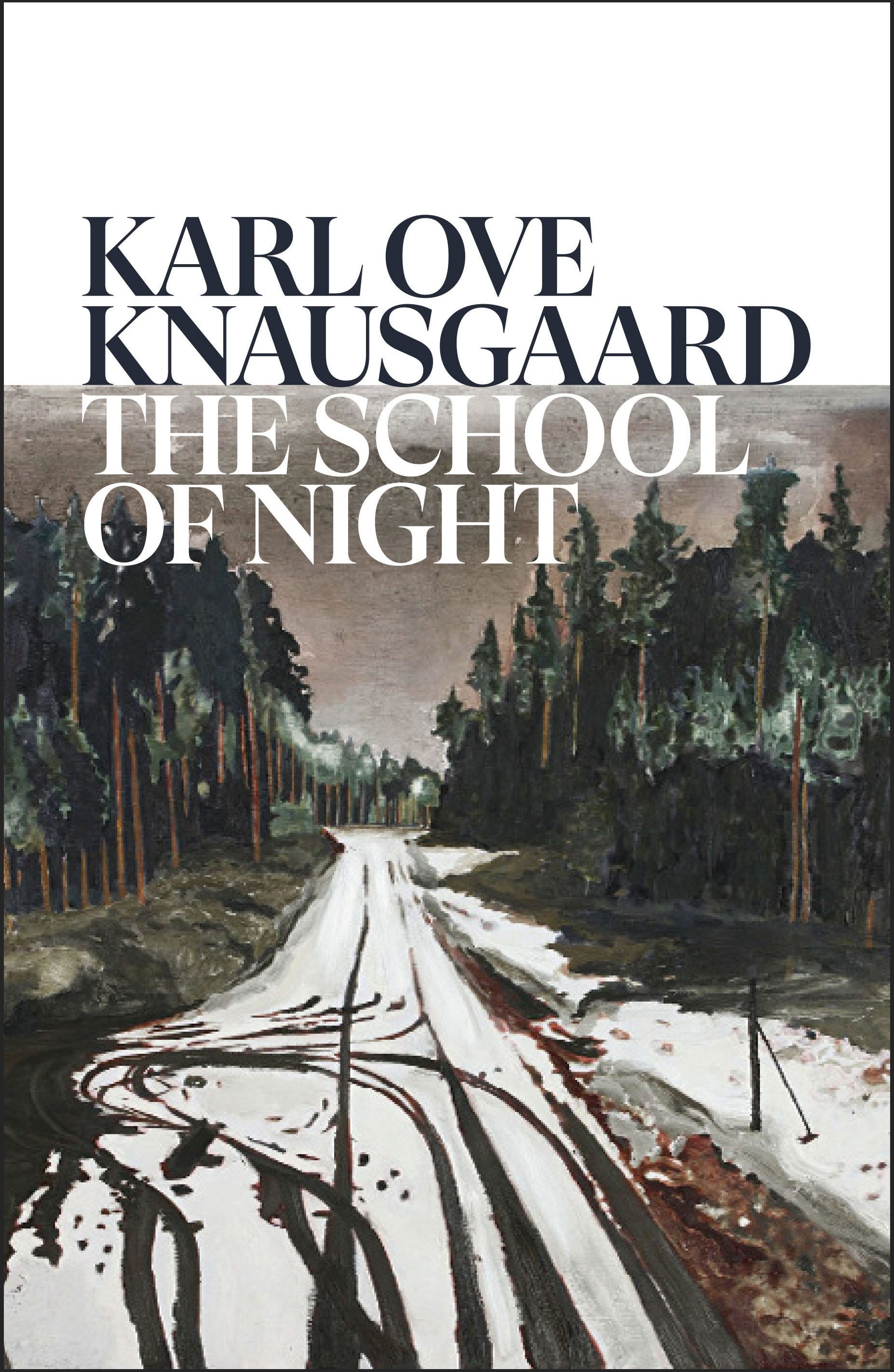
The School of Night by Karl Ove Knausgaard, translated from Norwegian by Martin Aitken (2025, first published 2023, gifted)
And with that, I’ve finished all the available books translated to English in Knausgaard’s Morning Star series. WHAT AM I SUPPOSED TO DO NOW???
The final pages of this tome gave me chills, which – looking back at my notes – seems to be the way I finished all three books preceding it. I know book five is coming in November, thank God – but after that, who knows how long the wait will be.
Is this as good as the others? Absolutely yes. But I would also say it’s the darkest of the series so far, with some scenes branded into my mind for life probably. So just be prepared for this to go places.
Every time I review one of these books, I say that you should read them in order so that you get the most rewarding reading experience. I have heard people say you can read them as stand alone, and I mean – I guess? But why would you not enjoy them in the order the author intended? The themes do build with each book, and there are characters that come up again and again, with back stories and expanded narratives. It’s hard enough to get a grip on everything as it is – and I read them basically back-to-back! Let’s be honest, Knausgaard is annoyingly meandering. He’s not one for employing pared back prose. This will either be your thing or it won’t, but for me, something about his hypnotic writing style grips me every time, even if he does take 20 pages to describe a trip to the shops.
The School of Night is a perfect example of getting the back story of a character that has come up before in this series – a guy called Kristian Hadeland.
In the first half of the book, we meet him as a photography student in London in 1985. The city is still seedy, but rife with possibilities. And Kristian can’t wait to cut off his family in Norway and embrace it all. He truly believes he and his art will one day conquer the world, and nothing is going to get in his way.
What I’m implying is that he isn’t a particularly nice person. In fact, he’s downright awful - narcissistic, contemptuous, constantly judging everyone around him without any ability to self-reflect at all.
Then he meets Hans, a Dutch artist who becomes somewhat of a friend, even though they clash often. When a horrible thing happens during an altercation between Kristian and a homeless man, he’s forced to make a Faustian bargain with Hans. And THAT is the end of part one.
In the second half, we find out how the rest of Kristian’s life has played out, and I’ll only say that he has indeed become a successful artist. But those few nights from the mid-80s have never left him, and eventually he finds out that all that ambition comes with a price.
I really don’t want to give anything else away, and this is a 500 page book so there is plenty to discover. It reads more like a psychological interrogation of desire, success and corruption of the soul. The supernatural touches are still there, right when you least expect them, although I have yet to understand why Kristian is a character Knausgaard wanted to deep dive into, or how he fits into the overall scheme of things. I have my theories – but only time will tell if I am right. As always, finding connections with the previous books is half the fun.
That aside, this was such a fascinating character study of a narcissist. Hadeland is incredibly vain – there are mirrors everywhere in the book (dualities seem to interest Knausgaard because this is a recurring theme: light and dark, good and evil, body and soul). But we can only really know Kristian on the surface – his doesn’t seem to feel anything other than anger or injustice. Behind the mirror is nothing, emptiness.
But even narcissism can be kept in check if you’re rooted in some form or reality. When Kristian was at home in Norway, his family kept him at least partially grounded. In London, when he decides he wants nothing more to do with them, his ego can truly take hold, and as it grows inside of him, so too does his outward behaviour change. His control over his personality loosens, and from there it’s a downhill slide. What is he prepared to sacrifice for personal success? Morality becomes abstract in the race to do what it takes.
And who is Hans? The devil has come to town, ladies and gentlemen! Well - I don’t know that, really. But Hans is there in Kristian’s darkest moments, and he exhibits characteristics that have come up before in this series that led me to wonder if he isn’t embodying the devil in some way. In previous books, Kristian also seems to be able to shapeshift, but what does it all mean? I don’t think we’ll know until the very end of the series. In any case a deal with devil is merely alluded to, and there is, as always, plenty of ambiguity in this book’s ending. That’s just the way Knausgaard plays – again, not for everyone, but damn do I like to roll these dice.
And then there’s the title itself. In the late Elizabethan era, there were rumours that a group of athiest intellectuals - poets and scientists - formed a group that called themselves The School of Night. Christopher Marlowe was supposedly a member, and he wrote a play called, as I’m sure you know, Doctor Faustus. The book clearly borrows from the play, with Hans and Kristian in the roles of Faustus and Mephistopheles (a high-ranking devil who works for Lucifer) respectively. Faustus famously asks this devil-man how he has come to be out of hell, to which Mephistopheles replies “Why, this is hell, nor am I out of it.” Hell is not a specific place, he explains, it is our every day, and only if we ultimately repent and go to Heaven can we escape it.
I’ll leave it there for now – otherwise I’ll go on and on, and believe me I COULD write forever about all the literary, artistic, social and religious allusions in this book. A disturbing - and addictive - read.
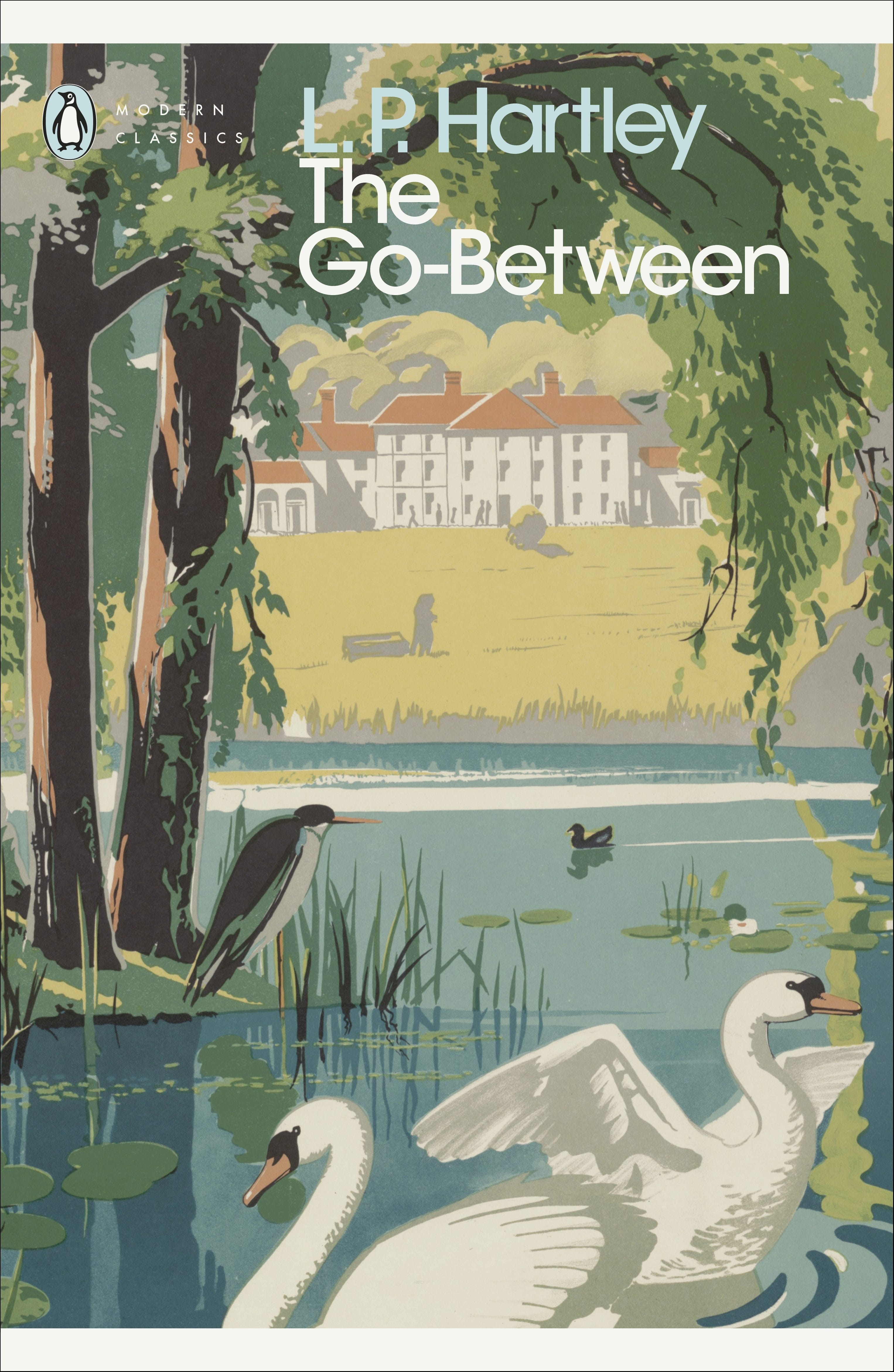
The Go-Between by L.P. Hartley (1953)
I’ve had this on my shelf for a long while, but I found myself in the mood for something that felt “English” in the old-fashioned sense. What I mean is, this sort of book is my equivalent of comfort reading. When I was growing up, Australia was still heavily influenced by UK culture – we got more British television then American, and certainly I was reading many of the English classics – all of Enid Blyton, The Secret Garden and A Little Princess by Frances Hodgson Burnett, Black Beauty by Anna Sewell, I Capture the Castle by Dodi Smith…I always loved these stories of English country houses that romanticised something I didn’t really understand the reality of until I got older. And I still love these types of books, although in the adult versions, the stories are much darker.
The Go-Between has a fantastic opening line: “The past is a foreign country: they do things differently there”. Our narrator is Leo and when the book opens, he’s about 60 years old. He’s looking back on the summer of 1900, when he was about to turn 13.
What Leo is trying to say in that opening line is that we can’t look back at history through the lens of the present and make judgements about a time that was vastly different. History is a place that operates under distinctly different social and economic norms. All we can do is examine it as it was, with notions perhaps alien to us now but that were alive and well at the time.
This is obviously a coming-of-age story. Over the course of that long, hot summer, Leo begins to shake off his childish self and see the world and its complexities more clearly. He goes to stay with a school friend called Marcus at Brandham Hall, and quickly realises that these gentrified people have real wealth. Leo comes from a lower middle-class family but is taken in by these aristocrats mostly with a sort of kindness – for example they buy him new clothes, suitable for the warm weather, without trying to embarrass him. And they generally embrace him as part of the family. Nonetheless, Leo can plainly see that he is different – he’s an outsider playing a part, but he doesn’t really belong.
He begins to act as a messenger between Marcus’s older sister Marian (who the family are keen to see married to the Viscount Trimingham, thus keeping their social status alive and well) and a local famer called Ted. At first, he doesn’t really understand what role he is playing in this relationship - in fact he barely understands it to be a relationship. But as Marian and Ted’s love affair becomes more intense, he gets drawn further into their deceit with terrible consequences.
I absolutely loved this book – its so evocative and propulsive, with such a strong narrative voice. Leo’s innocence is already on the cusp of burning out, and it feels bittersweet. But as he becomes embroiled in this forbidden romance, his naivety really does remind you that he is a boy growing up in very late Victorian England who simply hasn’t been exposed to desire, love, or class conventions. He’s in the looking glass, seeing and feeling things he doesn’t quite understand, and when the glass shatters, it leaves a trauma that he can’t shake even after all these years.
The situation between Marian and Ted left me feeling so many things. On the one hand, I was rooting for them because obviously you want to believe that true love can conquer all. And surely she should be able to marry who she wants! They’re two young, hot, sexual beings living their youth and their truth. But that would be seeing things through a 2026 lens. In reality, what they were doing was risky not just for themselves, but also for Leo. They are using him, and they behave selfishly. Marian at first seems mature, but really she’s only 20 years old, desperately in love and totally blinded by this love affair. Her frustration when Leo begins to tire of being at her beck and call leads her to act like a nasty brat, and both she and Ted manipulate him multiple times to get what they need, at his expense. When the very worst happens, he’s left reeling by his inadvertent part in the whole thing.
The book does an excellent job at foreshadowing - and yet I was still shocked when the ending came. After such a long build up it happens so fast, which is part of what leaves you stunned. We return once more, in the end, to Leo’s 1950s present and feel truly desperate to know what happened post-tragedy! Thankfully, an epilogue takes care of that – and while I have much to say about where things ended up, but I don’t want to spoil the novel! Just read it - it’s wonderful.
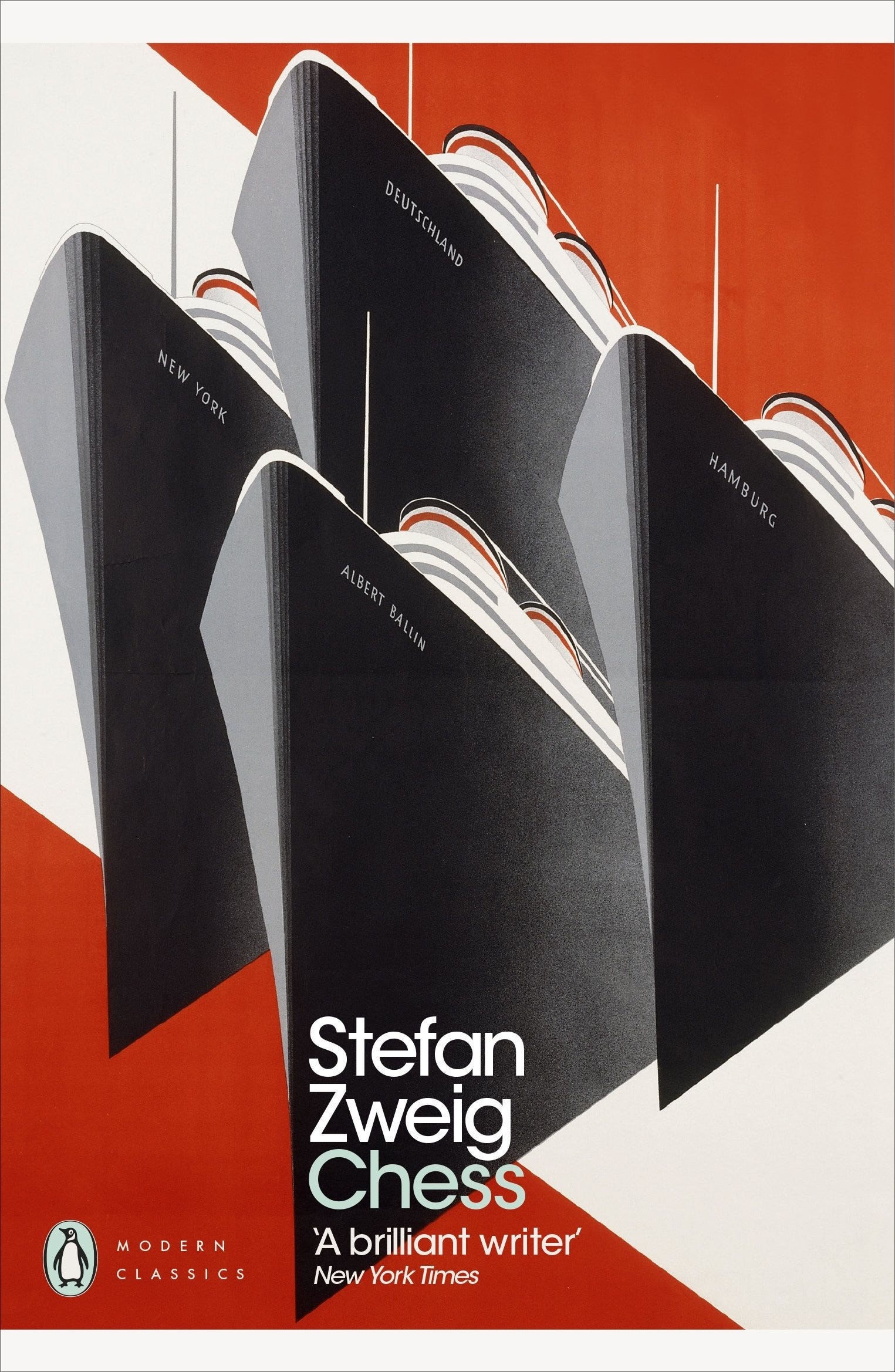
Chess by Stefan Zweig, translated from German by Anthea Bell (1941)
Backlist AND backlist in translation – a double whammy! This short novella has been published under many different names: Chess, Chess Story, The Royal Game. And Zweig is a Jewish-Austrian author I have been meaning to read for some time.
His story is a sad one. Although he was incredibly popular and I believe widely translated in the 1920s and 30s, the rise of Nazism in Austria saw him flee Europe first for the United States and then Brazil. He settled there briefly before committing suicide with his wife in 1942 – the year after this novella was written. He despaired at the future of humanity and was totally disillusioned by what was happening in Europe politically and therefore culturally. And he could not understand who he was anymore as a person in exile.
In any case, reading this has made me excited to explore more of Zweig’s work. If he can do so much in less than 100 pages, I am keen to see what he has accomplished with his longer novels.
This is a brilliantly tense and taut piece of work that explicitly calls out the psychological impact of Nazism. Of course, it’s also about chess.
On a ship bound from New York to Buenos Aires, a traveller hears that on board is a world champion chess player called Mirko Czentovic. He’s intrigued by the man’s story – he’s an uneducated peasant who learnt the game by watching others play, and then turned out to be a prodigy. Now, he’s notoriously cold and unfriendly, and very, very wealthy having used the game to make a fortune despite coming from nothing.
Our narrator wants to lure him out – perhaps he’ll be tempted to play a game or two. He and a fellow passenger, a gambling man, manage to convince Czentovic to play for cash. They lose instantly, but in the crowd gathered to watch is one Mr B, also a skilled player, who helps them turn their game around.
So - who is Mr B? How did he learn to play so well? And why does the game seem to send him into am uncontrolled mania?
Obviously, I will not be answering those questions. You’ll have to read it yourself to find out! But I can tell you that there is another, unexpected layer to the story that serves as both as a critique of the Nazi regime – written RIGHT at the height of their influence and power - as well as a look at obsession, oppression and survival. One of the interesting things the book is exploring is the mind: how it has the capacity both to save us, and send us into the descent of madness. Where is that line, exactly? How do we recognise it?
The contrast between Czentovic and Mr B is obvious. One is an aloof and callous genius who can barely string a sentence together, and one is a tormented but brilliant intellectual who struggles to remain in control of himself. The clash between these two men felt significant in the metaphors they represent. But also because of the way I understand chess, as a game that can embody calculated strategy and remarkable creativity within the confines of the board. And the board of course represents life! These two men have survived things, and they’ ve learnt things in this survival that they can apply to chess of course but also to their lives. In the context of their histories, this isn’t as cheesy as it sounds.
At 97-odd pages you can easily read this in one sitting. And you’ll want to, because you’ll be caught up in both the personal life of Mr B and in how this game will end.
But where to next with Zweig?? I have both The Post-Office Girl and Beware of Pity, and a collection of six of his longer short stories (I think a couple of them are novella’s, a genre I’m told he excels in). Let me know if you’ve read him!
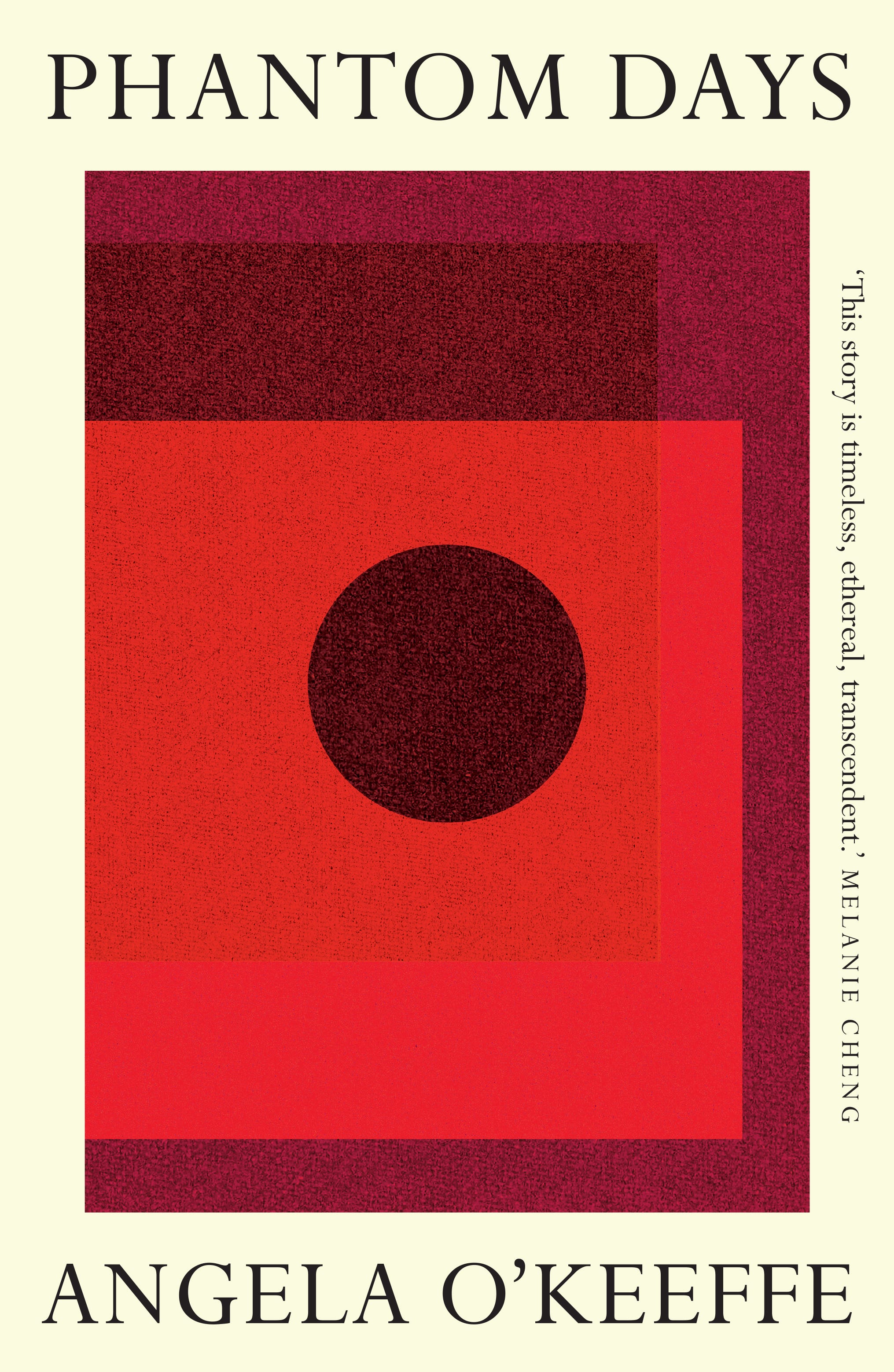
Phantom Days by Angela O’Keefe (2026, gifted)
Angela O’Keefe is another underrated Australian novelist whose talent deserves to be more widely recognised. She’s really interested in writing from unique perspectives. In her first book, Night Blue, the narrator is a painting: Jackson Pollock’s ‘Blue Poles’ which I just saw again up close while I was at the National Gallery in Canberra - it is truly exquisite. In her second, the ghost of Hortense Cezanne (wife of the painter) haunts a writer stuck in Paris during the pandemic.
Which brings us to her third effort, Phantom Days, partially narrated by a book.
There are two other viewpoints – Isabel and her mother, Maggie. Isabel is the owner of the book, bought on a whim before a trip to London to see her boyfriend Lewis, who’s there on a work trip. The holiday is fine, but an incident brings clarity to Isabel regarding their relationship, which she decides isn’t right for her. Back in Sydney, she leaves the book in their cab from the airport and Lewis takes it home with him. The book, meanwhile, is observing everything, taking in information and making assessments.
Maggie – a breast cancer survivor, like the author herself – is taken aback by a different health challenge faced by Isabel when she returns home. And it’s a really interesting one, inspired by a story that O’Keefe once heard at a party, that she could never shake off. I learnt this from the authors note at the back – oh how I LOVE authors notes! I love when they give us insight into the story’s inspiration, into the writer themselves.
In any case, I will say this: the book obviously needs you to lean in. There’s more than one inanimate object here that can take in what they “see” around them and transmit information. So, suspend your disbelief and go with it. What makes it work is that there’s no fancy explanations or superfluous prose – it is what it is, and you don’t need to understand it. Nor does the writing serve as an extra distraction on top of the magical realism elements. Because its so pared back, the plot can remain unusual but also considered and carefully constructed.
The book is partially exploring how things manifest in our bodies and minds, alienating us from ourselves and each other. Each of the characters have experienced losses that have changed them either physically or emotionally – Maggie has had a double mastectomy, for example, which changes her perception of her own body. And Lewis has grown up without his parents, in an…let’s say unusual situation that warps how he sees relationships.
It’s also looking at how strange connections can form between reader and book – I mean, how many of us have said the words “this book changed my life!”. Books can unlock mysteries of the universe, can help us put names to experiences and feelings, books can become our friends. What if it works both ways? What if a book can read you too? Maybe it can see things you can’t.
O’Keefe’s writing is always lovely, and this is another one you can easily read in one afternoon. I really enjoyed it!
What a great reading month so far! And at the moment, I’m smack bang in the middle of Whistler by Ann Patchett, which of course I’m loving. I’ll report back on that in my next wrap-up.
Have you been reading anything wonderful lately? Let me know.
I’ll see you again in two weeks!
Until then,
Nell
I’ve been wanting to read more Nordic literature and I know people love Knausgaard. I find him kind of intimidating. What kind of reader would you say he’s best suited to?
Beware of Pity is one of my all time faves!! Strongly recommend!! Burning Secret is also great. My favourite read so far this month is The Palm House by Gwendoline Riley - I loved it so much, especially the dialogue.